
Articles
What Is a Stablecoin Vault? A Guide to Smarter USDC Allocation

Key Takeaways
- A Stablecoin Vault allocates USDC into a defined yield-generating strategy.
- Yield comes from the underlying activity, not from the stablecoin itself.
- The source of return matters more than the headline APY.
- Liquidity and redemption terms can vary significantly between vaults.
- Every vault carries strategy, counterparty, and operational risks.
- Transparent vault infrastructure can turn stablecoins into portfolio building blocks.
Stablecoins have solved how digital dollars move. The more important question now is what those dollars should do once they arrive.
With the stablecoin market now valued at approximately $300 billion, stablecoins represent one of the largest pools of liquid onchain capital. Yet much of this capital remains idle, moves between short-lived APYs, or enters yield products where the source of return is difficult to assess. This creates a growing need for infrastructure that can allocate stablecoins through clearer, more structured strategies.
As stablecoin adoption expands, the focus is moving beyond payments towards how this capital can be deployed more effectively across onchain markets.
A Stablecoin Vault helps close this allocation gap. It provides a structured way to deploy assets such as USDC into defined strategies, with clear information on how returns are generated, what risks are involved, and when capital can be redeemed.
What Is a Stablecoin Vault?
A Stablecoin Vault is an onchain structure that accepts stablecoin deposits and deploys them into a predefined strategy.
That strategy may involve private credit, quantitative trading, tokenized assets or other forms of structured yield crypto. Instead of sourcing, executing, and monitoring each opportunity independently, the depositor accesses the strategy through a single USDC vault.
The stablecoin acts as the entry asset. The underlying strategy determines the return.
How Does a Stablecoin Vault Work?
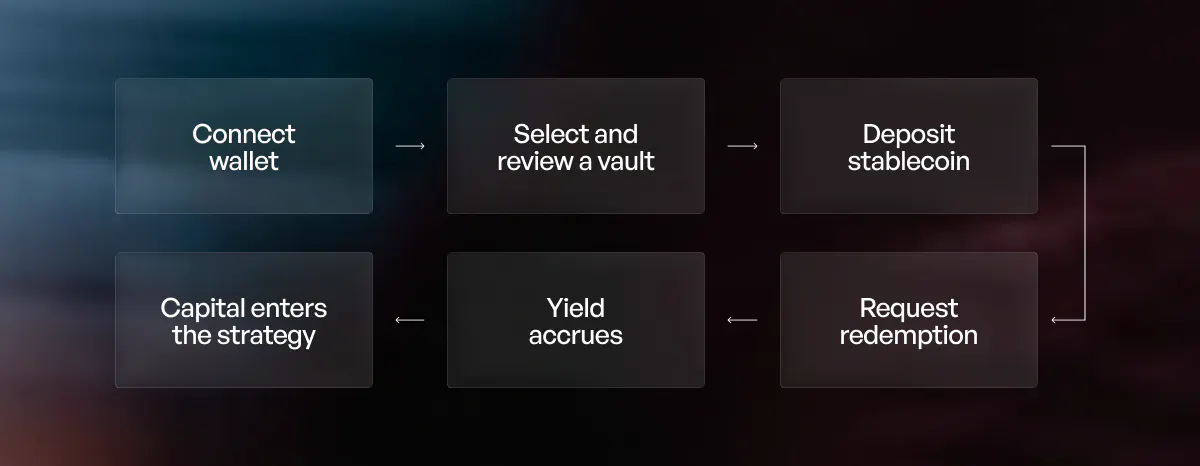
The structure is relatively simple:
Connect wallet → Select and review a vault → Deposit stablecoin → Capital enters the strategy → Yield accrues → Request redemption
For Valdora’s Stablecoin Yield Vault, deposited capital is deployed through Abhi into short-duration, cash flow-linked private credit. The strategy includes payment and remittance financing, invoice factoring, and working-capital facilities backed by verified business cash flows. Yield is generated from the financing spread earned when these facilities are repaid.
Users can request a withdrawal at any time, although settlement depends on available liquidity and the repayment of active facilities. The vault currently states a redemption period of two to five days.
Why Do People Use Stablecoin Vaults?
The appeal of a stablecoin yield vault is not simply a higher APY. It is access to a more structured allocation process.
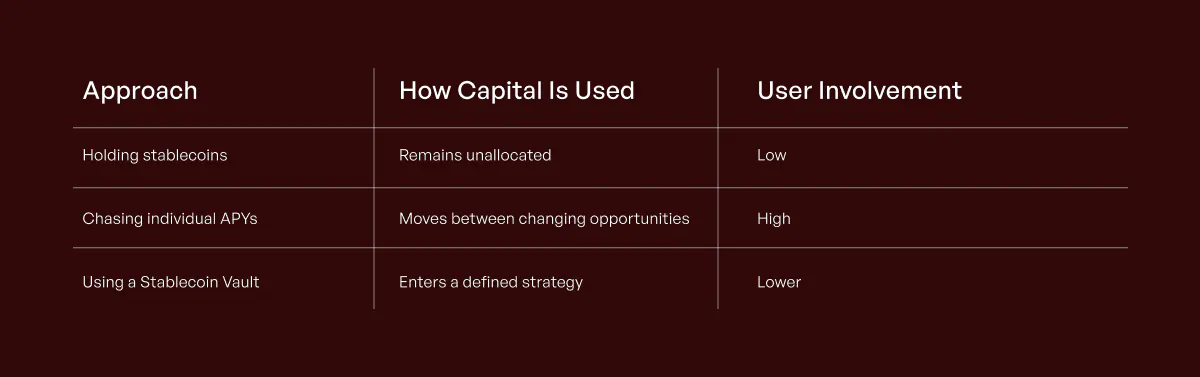
A well-designed vault can reduce the operational burden of researching counterparties, moving capital across platforms, and managing multiple positions. It also gives users a consistent entry asset while allowing them to choose between different strategies.
However, convenience should never replace due diligence.
How Should You Evaluate a Stablecoin Vault?
The APY may get your attention, but the structure should earn your allocation. Before depositing, understand what is producing the yield, where the capital is deployed, and whether returns come from real economic activity or temporary incentives.
Then look at the full picture: who manages the strategy, what could go wrong, how quickly funds can be redeemed, and what fees reduce the final return. A credible vault should make these details easy to understand, because the quality of a yield opportunity depends on far more than the number displayed at the top.
What Risks Should You Understand Before Using a Stablecoin Vault?
No Stablecoin Vault is risk-free, and returns are not guaranteed.
Depending on the strategy, risks may include borrower default, counterparty failure, smart contract vulnerabilities, stablecoin depegging, market losses, delayed settlements, and limited liquidity. Some strategies may allow withdrawals within days, while others may require longer redemption periods because capital is deployed into private credit or other less-liquid assets.
The word “stable” describes the intended price behaviour of the deposit asset. It does not remove the risks of the strategy built around it.

Understanding Valdora’s Stablecoin Vault
Valdora uses USDC as a common entry point into curated, strategy-driven vaults. Each vault connects stablecoin capital to a defined real-world or quantitative strategy, with the deployment model, partners, fees, risks, and redemption terms presented separately.
This matters because not all yield is created in the same way. One vault may generate income from short-duration business financing, while another may use systematic market strategies. Through partners such as Abhi and Suisse Quant Group, Valdora gives USDC holders access to different return sources without requiring them to manage each strategy independently.
Valdora’s role is to package these strategies within onchain vault infrastructure, issue the vault position, and provide visibility into how capital is deployed. The result is a more navigable approach to stablecoin allocation: one deposit asset, multiple strategy choices, and clearly defined terms.
Conclusion
Stablecoins are becoming a broader allocation layer for onchain capital, but their value as portfolio infrastructure depends on the quality of the strategy behind them. Valdora provides a structured way for users to access curated, strategy-driven vaults, with visibility into the yield source, underlying assets, fees, and redemption terms.
As stablecoin markets mature, informed allocation will matter more than headline APYs. By bringing strategy selection, transparency, and onchain access into one platform, Valdora helps stablecoin holders move from passive balances towards more purposeful portfolio allocation.
Frequently Asked Questions
What is a Stablecoin Vault?
A Stablecoin Vault accepts assets such as USDC and allocates them to a defined yield-generating strategy.
How does a Stablecoin Vault generate yield?
Yield comes from the vault’s underlying strategy. In Valdora’s Stablecoin Yield Vault, returns are generated through short-duration private credit facilities backed by verified business cash flows. The vault earns a financing spread when these facilities are repaid.
Are Stablecoin Vaults risk-free?
No. Risks may include counterparty defaults, market losses, smart contract vulnerabilities, liquidity constraints, and stablecoin depegging. Returns are not guaranteed, and loss of capital is possible.
How does Valdora’s Stablecoin Vault work?
Users deposit USDC into a selected vault, where capital is deployed through a curated external strategy. Returns and redemption terms depend on the structure and performance of that strategy.